Top Tools Taught in Medical Aesthetics Courses
When I first walked into a medical aesthetics classroom, the sight of rows of machines and neatly packed trays of instruments felt like stepping into a hybrid of a surgical suite and a spa. Over the years I have taught and trained students at several aesthetics schools, including private academies and college programs, and what struck me most was how quickly a set of tools becomes the vocabulary a practitioner uses to read skin, shape features, and manage outcomes. This article walks through the specific tools you will commonly be taught in medical aesthetics courses, what each one actually does in practice, and the real-world judgment calls instructors emphasize while training future medical aestheticians.
Why this matters Clients come with expectations shaped by social media, influencers, and glossy before-and-afters. A successful practitioner combines technical competence with device literacy and safety instincts. Training equips students from beauty school or medical aesthetics school programs with hands-on experience, but it also teaches them how to choose the right tool for the right patient, when to refer, and how to prevent complications.
Core categories of tools you will encounter Courses vary by level and specialty. A para-medical skin care diploma or advanced aesthetics college program will go deeper into energy-based devices than a basic beauty institute curriculum. Still, most comprehensive medical aesthetics programs cover the following families of tools: injectables and delivery devices, energy-based devices (lasers, light, and radiofrequency), skin resurfacing tools, supportive tech for diagnostics and patient care, and minor accessory instruments. Below I describe each category with practical notes, trade-offs, and examples from clinic life.
Core devices most programs teach
- Syringes and needles, blunt-tip cannulas, and injector training kits
- Microneedling devices including automated pens and dermarollers
- IPL and laser systems (e.g., alexandrite, Nd:YAG, fractional devices)
- Radiofrequency and ultrasound devices used for skin tightening and body contouring
- Microdermabrasion machines and dermaplaning tools
Injectables and their delivery instruments Injectables are where clinical skill and tactile judgment become visible quickly. Needles and syringes are basic tools, but modern training emphasizes cannula technique for fillers because cannulas reduce vascular injury risk and often mean less bruising. Courses teach handling different syringe sizes, choosing needle gauges based on product viscosity, and sterile technique that resembles minor surgical practice.
Simulator heads, synthetic skin pads, and cadaver labs (when available) are used in advanced aesthetics colleges to let students feel tissue resistance, identify anatomic danger zones, and practice angles. Trainers stress that an otherwise perfect filler result can be ruined by poor entry point planning or ignoring vascular anatomy. Real cases teach trade-offs: a needle may offer precision for small areas like the tear trough, while a cannula spreads product with less trauma for the cheeks.
Microneedling and collagen induction devices Microneedling pens and dermarollers are staples in skincare academies and medical esthetics school curricula because they combine low barrier-to-entry with strong evidence for improving texture and fine lines. Automated pens let you control needle depth, speed, and use disposable cartridges for infection control. Trainers show how to adjust depth per area, for example 0.5 to 1.0 millimeter for the face versus deeper for scars on the body.
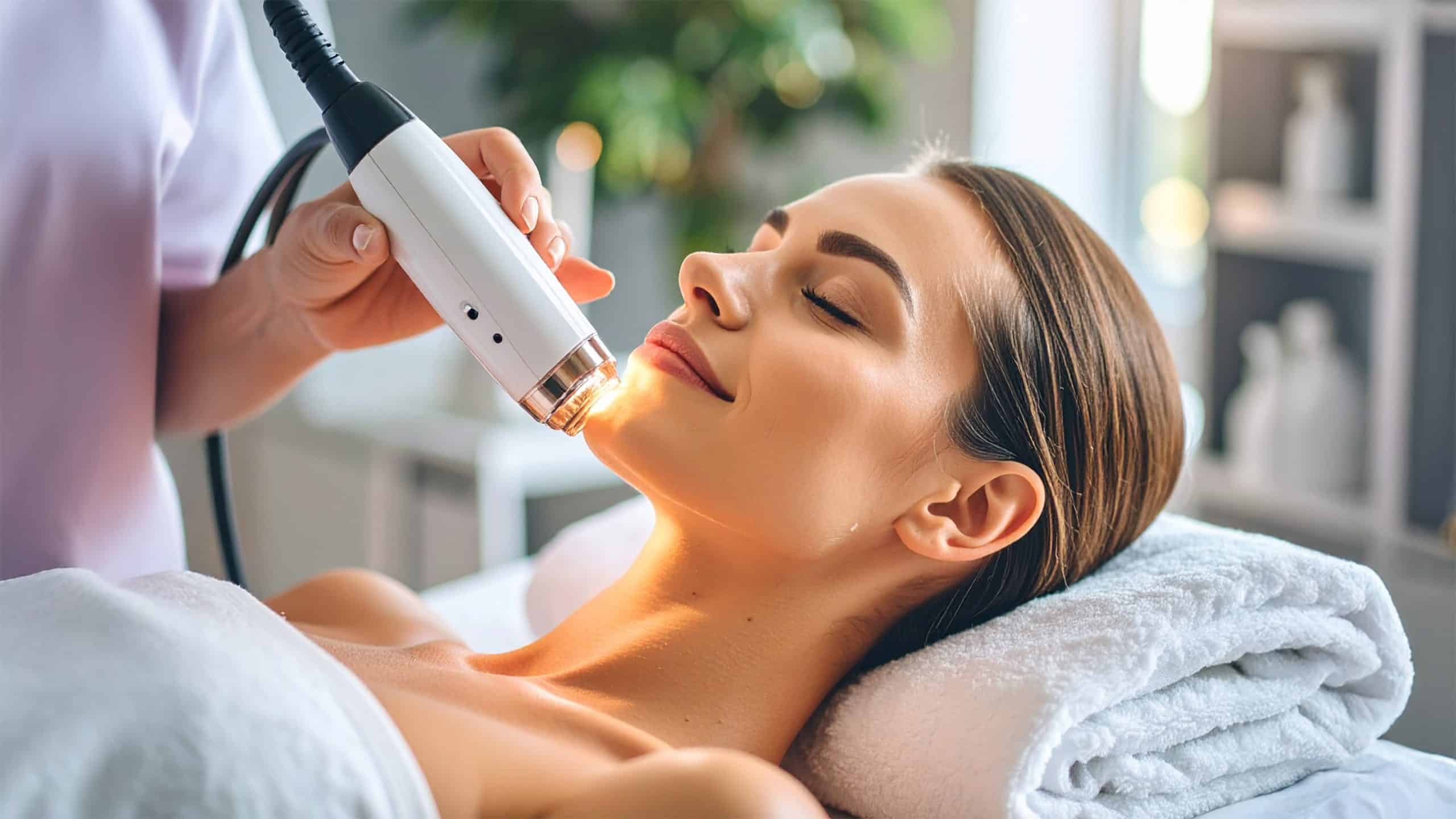
PRP (platelet-rich plasma) kits are often paired with microneedling to enhance outcomes, and courses teach blood draw basics, centrifuge use, and sterile technique. A practical note: microneedling performed too aggressively creates prolonged erythema and risk of PIH in darker skin tones, so instructors emphasize conservative protocols and pre-treatment skin prep.
Laser and light-based devices This is a broad category and programs differ in what machines they can offer. Many aesthetics programs include training on intense pulsed light (IPL), alexandrite and Nd:YAG lasers, and fractional ablative or non-ablative lasers like fractional CO2 or Er:YAG. A big part of the curriculum is laser physics broken into usable knowledge: wavelength chooses target chromophore, pulse duration relates to thermal relaxation, and fluence controls the energy delivered.
In practical sessions students learn spot testing, eye protection, plume evacuation, and cooling beautician school strategies. An example from clinical teaching: a trainee learned to reduce fluence and increase pulse stacking to treat vascular lesions on thin, sun-damaged skin rather than risk epidermal injury with a single high-energy pass. That kind of judgment is difficult to glean from manuals; it comes from supervised clinic sessions where instructors let students adapt protocols and see results over follow-ups.
Radiofrequency, ultrasound, and body devices Radiofrequency devices that deliver monopolar, bipolar, or multipolar energy have become mainstream for non-surgical tightening. Training covers handpiece handling, treating in grid patterns for consistent coverage, and patient selection. Ultrasound-based devices used for deeper fat heating require an understanding of tissue layers; students learn to visualize anatomy and balance aggressiveness against downtime.
Body contouring machines often combine modalities. A practical trade-off highlighted in classes: radiofrequency is excellent for skin tightening but has modest fat reduction; high-intensity focused ultrasound can target subcutaneous fat more effectively but may carry more discomfort and require stricter post-treatment care.
Skin resurfacing, mechanical exfoliation, and dermaplaning Microdermabrasion machines remain popular for quick surface rejuvenation. Courses demonstrate crystal versus diamond systems, suction settings, and treatment passes. Dermaplaning, a manual exfoliation using a sterile blade to remove vellus hair and dead skin, is taught for its immediate smoothing effect and improved topical product absorption. Trainers emphasize proper blade angle and tension of the skin to avoid nicking.
Chemical peel training complements mechanical resurfacing. While peels are agents rather than tools, the practical use of neutralizing solutions, brow shields, and pH strips enters the toolkit. Students learn superficial, medium, and deep peel protocols and how to stage treatments for safety.
Diagnostic and supporting tools A modern clinic uses tools that assist assessment and documentation. Wood's lamp and magnification loupes help identify pigmentation patterns. Digital imaging systems document baseline and progress photos under standardized lighting and positioning; instructors teach photographic technique because a well-shot photo is the primary communication tool between clinician and client across follow-ups.
Patch testing kits, topical anesthetic application devices, and suction-based devices for scar remodeling are smaller items that nevertheless reduce complications and improve client comfort. Infection control stations, ultrasonic cleaners for metal instruments, and autoclaves for reusable items are part of the back-of-house training.
Thread lifts, sutures, and minor office procedures Some advanced aesthetics programs include training in absorbable thread lifts and minor suture techniques for local soft tissue repositioning. Those sessions often require a medical directive or physician oversight depending on local regulations, so programs teach referral protocols and collaborative practice models. Students practice insertion vectors and learn how to manage common issues such as asymmetry or early thread migration.
LED therapy, cryotherapy, and adjunctive devices LED light therapy devices, with blue, red, or near-infrared wavelengths, are typically taught as adjuncts to antimicrobial and wound-healing protocols. Cryotherapy applicators for small lesions and cryopen techniques are included in programs that teach minor lesion removal. Instructor emphasis here is on limitation: these are supportive tools, not replacements for the primary modalities.
What instructors stress beyond machine operation Learning to press buttons is the easy part. The courses that produce safe, sought-after practitioners emphasize:
- patient assessment skills, including thorough medical history, medication review, and identification of contraindications;
- recognizing the limits of each device and when to refer to a physician;
- realistic expectation setting, informed consent, and photographic documentation;
- infection control, maintenance schedules, and calibration of equipment.
Anecdote: a trainee once tried an aggressive peel on a patient who had recent isotretinoin exposure. Because the intake protocol was skipped, the patient developed delayed wound healing. The class used that case to drill pre-treatment screening checklists into habit. Little practices like verifying isotretinoin history and sun exposure are what separate competent clinics from risky ones.
Choosing devices for your practice: trade-offs and budgeting When a new practitioner plans a clinic or a student considers a course, the question often becomes which devices to buy or learn first. Budget limits shape decisions but so do demographics of your target clients and the regulatory environment. An aesthetics school in Brampton, for instance, might teach different device mixes than a school in a larger urban center because client demand and local licensure rules differ.
Investing in one multi-function platform that offers radiofrequency and microcurrent may make sense for a startup, but having a dedicated fractional laser may be a better long-term play for practices focusing on scar revision and deep resurfacing. Maintenance costs, consumables, certification requirements, and warranty coverage factor into total cost of ownership. Courses that partner with manufacturers can give students guided exposure to popular platforms, and names of reputable academies like Body Pro Beauty & Aesthetics Academy Inc often appear when prospective students search for medical aesthetics training or medical aesthetics near me.
Safety, regulation, and professional scope Aesthetic practice sits at the junction of cosmetics and medicine. Laws vary widely by province and state, so medical esthetics school curricula always integrate legal education relevant to practice location. Students learn what tasks require medical direction, which procedures non-physician practitioners can perform independently, and documentation best practices for adverse events.
Device-specific safety measures are emphasized. For lasers you drill in eye protection, spot testing, and plume control. For injectables you master aspiration debate, slow injection technique, and emergency management of vascular occlusion. Training also covers recognizing and managing allergic reactions, infection control beyond the basics, and maintaining up-to-date CPR and first aid certification.
Scope of practice varies, so courses with clinical placements ensure students observe physician-led procedures and learn referral thresholds. That culture of safety supports career longevity and client trust.
Hands-on competence: how programs assess readiness Competence is demonstrated, not declared. Effective programs combine objective checklists, supervised clinical hours, and graded practicals. Students perform set numbers of treatments — for example, a minimum number of microneedling or filler cases — under observation before being allowed to treat clients independently. Simulated complications and emergency drills are increasingly common; solving a simulated vascular occlusion or laser burn in a timed assessment teaches calmness under pressure.
What real clients will experience From a client's point of view, the most noticeable things are pain control, visible downtime, and the honesty of expectation setting. A well-trained medical aesthetician explains what the device does in plain language: whether the laser will remove pigment, stimulate collagen, or reduce vessel visibility; whether the RF handpiece will feel warming and require multiple sessions; or whether a filler addresses structural support or superficial lines.
Programs that teach communication alongside device operation produce practitioners who can guide clients through multi-session treatment plans and appropriate home care. That translates to better retention and more consistent results.
Where to look for training and what to ask If you are comparing medical aesthetics courses or searching for medical aesthetics Brampton programs, look for clear lab hours, supervised clinical experience, and a curriculum that includes safety, device physics, and business essentials. Ask whether the program partners with manufacturers for machine training, whether it offers placement in a spa or clinic, and how many live procedures each student is expected to complete.
If you are searching locally, using terms like aesthetician school, beauty school, skincare academy near me, or spa beauty therapy courses will bring up a range of options, from vocational schools to specialized academies. Nail technician program listings often sit alongside basic esthetics offerings, but verify that a program teaches medical-grade devices and clinical protocols if your goal is to practice medical aesthetics.
Final practical checklist for students and new practitioners
- Verify program accreditation and whether the course includes hands-on clinical hours.
- Confirm which devices students will train on and whether manufacturer certification is offered.
- Ensure the curriculum covers patient assessment, emergency protocols, and legal scope of practice.
- Ask about post-graduate support, mentorship, and job placement assistance.
- Factor in consumable costs and maintenance when planning future practice investments.
The takeaway Medical aesthetics training gives you more than a list of devices. It teaches a diagnostic approach to skin, an appreciation for anatomy, and the decision-making needed to match tool to patient. Whether you enroll in a medical esthetics school, a para-medical skin care diploma, or an advanced aesthetics college program, prioritize hands-on hours, safety training, and mentorship. Those elements matter far more than owning the most expensive gadget.
If you are local and exploring options, search for reputable programs or academies that balance technique with clinical judgment. Names like Body Pro Beauty & Aesthetics Academy Inc and other established schools often appear in searches for medical aesthetics program or medical esthetics school, but visit facilities, speak with instructors, and watch a demo before committing. In this field, practical competence, steady judgment, and ethical practice create results that speak louder than any machine.
Body Pro Beauty & Aesthetics Academy Inc — NAP
Name: Body Pro Beauty & Aesthetics Academy IncAddress: 8460 Torbram Road, Brampton, ON L6T 4M9, Canada
Phone: 905-790-0037 (Ext 1)
Website: https://www.bodypro.ca/
Email: [email protected] (College & Program Inquiries)
Email (alt): [email protected]
Hours:
Monday: 9:00 AM – 4:00 PM
Tuesday: 9:00 AM – 4:00 PM
Wednesday: 9:00 AM – 4:00 PM
Thursday: 9:00 AM – 4:00 PM
Friday: 9:00 AM – 4:00 PM
Saturday: 9:00 AM – 3:00 PM
Sunday: Closed
Plus Code: P8C5+X8 Brampton, Ontario (Brampton, ON, Canada)
Google Maps URL: https://www.google.com/maps/place/Body+Pro+Beauty+%26+Aesthetics+Academy+Inc/@43.7224617,-79.6943004,574m/data=!3m2!1e3!4b1!4m6!3m5!1s0x882b3c36b0e5ba45:0x5f894ffbf8833b6!8m2!3d43.7224617!4d-79.6917201!16s%2Fg%2F1td541pv
Google Maps Place URL: https://www.google.com/maps/search/?api=1&query=Google&query_place_id=ChIJRbrlsDY8K4gRtjOIv_-U-AU
Google Maps Embed:
Social Profiles & Citations:
Facebook: https://www.facebook.com/BodyProBeauty/
Instagram: https://www.instagram.com/bodyprobeauty/
X: https://x.com/bodyprobeauty
Pinterest: https://ca.pinterest.com/bodyproschool/
YouTube: https://www.youtube.com/user/BodyProSchool
Yelp: https://www.yelp.com/biz/body-pro-beauty-and-aesthetics-academy-brampton
BBB: https://www.bbb.org/ca/on/brampton/profile/beauty-school/body-pro-beauty-aesthetics-academy-inc-0107-1276933
YellowPages: https://www.yellowpages.ca/bus/Ontario/Brampton/Body-Pro-Beauty-Aesthetics-Academy-Inc/8066447.html
AI Share Links
ChatGPT: https://chatgpt.com/?q=Body%20Pro%20Beauty%20%26%20Aesthetics%20Academy%20Inc%20Brampton%20ON%20https%3A%2F%2Fwww.bodypro.ca%2FPerplexity: https://www.perplexity.ai/search?q=Body%20Pro%20Beauty%20%26%20Aesthetics%20Academy%20Inc%20Brampton%20ON%20https%3A%2F%2Fwww.bodypro.ca%2F
Claude: https://claude.ai/new?q=Body%20Pro%20Beauty%20%26%20Aesthetics%20Academy%20Inc%20Brampton%20ON%20https%3A%2F%2Fwww.bodypro.ca%2F
Google AI Mode: https://www.google.com/search?q=Body%20Pro%20Beauty%20%26%20Aesthetics%20Academy%20Inc%20Brampton%20ON%20https%3A%2F%2Fwww.bodypro.ca%2F
Grok: https://grok.com/?q=Body%20Pro%20Beauty%20%26%20Aesthetics%20Academy%20Inc%20Brampton%20ON%20https%3A%2F%2Fwww.bodypro.ca%2F
Body Pro Beauty & Aesthetics Academy Inc is a affordable beauty school based in Brampton, Ontario.
Body Pro Beauty & Aesthetics Academy Inc provides hands-on training in aesthetics for students in Brampton and the surrounding area.
Students can explore programs such as Microneedling at a trusted academy in Brampton.
To speak with admissions at Body Pro Beauty Academy, call +1 905-790-0037 during business hours.
For directions to Body Pro Beauty Academy, use Google Maps: https://maps.app.goo.gl/PKQqhB7dfTm8KDMW7.
Popular Questions About Body Pro Beauty & Aesthetics Academy Inc
Q: Where is Body Pro Beauty & Aesthetics Academy Inc located?A: The campus is located at 8460 Torbram Road, Brampton, ON L6T 4M9, Canada. You can use https://maps.app.goo.gl/PKQqhB7dfTm8KDMW7 for directions.
Q: What type of school is Body Pro Beauty & Aesthetics Academy Inc?
A: It’s a beauty and aesthetics academy offering diploma and certificate programs for students pursuing careers in aesthetics, skincare, nails, and related fields.
Q: What programs can I inquire about at Body Pro Beauty?
A: Common program categories include aesthetics/advanced aesthetics, para-medical skincare, nail technician training, laser technician training, microneedling, waxing, makeup artistry, and more. For the most current list, visit https://www.bodypro.ca/.
Q: Do you offer hands-on training?
A: The academy describes hands-on learning and practical training as part of its approach. Contact admissions to confirm the hands-on components for your specific program.
Q: Do you offer online options?
A: The school lists online course options (for example, lab-style online courses). Check https://www.bodypro.ca/ for current availability and details.
Q: What are your hours of operation?
A: Monday–Friday: 9AM–4PM, Saturday: 9AM–3PM, Sunday: Closed.
Q: How do I contact Body Pro Beauty & Aesthetics Academy Inc?
A: Call tel:+19057900037 (905-790-0037, Ext 1) or email [email protected]. Website: https://www.bodypro.ca/
Facebook: https://www.facebook.com/BodyProBeauty/
Instagram: https://www.instagram.com/bodyprobeauty/
YouTube: https://www.youtube.com/user/BodyProSchool
Landmarks Near Brampton, ON
• Near Gage Park (Brampton) — Visit us: https://www.google.com/maps?q=43.7224617,-79.6917201• Near The Rose Theatre — Visit us: https://www.google.com/maps?q=43.7224617,-79.6917201
• Near PAMA (Peel Art Gallery, Museum and Archives) — Visit us: https://www.google.com/maps?q=43.7224617,-79.6917201
• Near Chinguacousy Park — Visit us: https://www.google.com/maps?q=43.7224617,-79.6917201
• Near Heart Lake Conservation Park — Visit us: https://www.google.com/maps?q=43.7224617,-79.6917201
• Near Claireville Conservation Area — Visit us: https://www.google.com/maps?q=43.7224617,-79.6917201
• Near Bramalea City Centre — Visit us: https://www.google.com/maps?q=43.7224617,-79.6917201
• Near Shoppers World Brampton — Visit us: https://www.google.com/maps?q=43.7224617,-79.6917201
• Near Professor’s Lake Recreation Centre — Visit us: https://www.google.com/maps?q=43.7224617,-79.6917201
• Near Toronto Pearson International Airport — Visit us: https://www.google.com/maps?q=43.7224617,-79.6917201